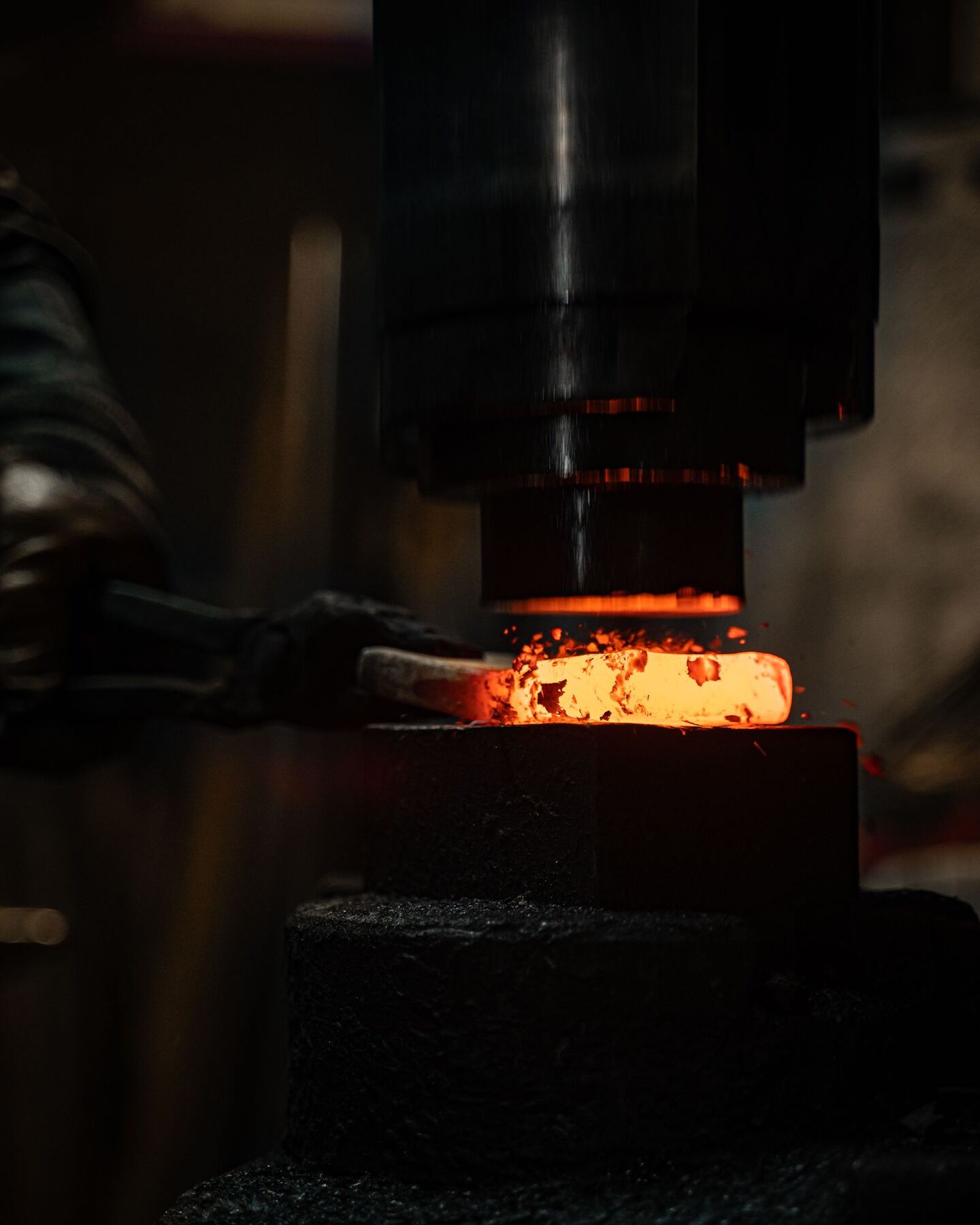
Hot stamping, or closed-die forging, is the most widely used forging process for producing strong mechanical parts in series. Gazo Forge Industrie has practised it in Kénitra since 1999, from die design to the heat-treated, machined and inspected part.
What is hot stamping?
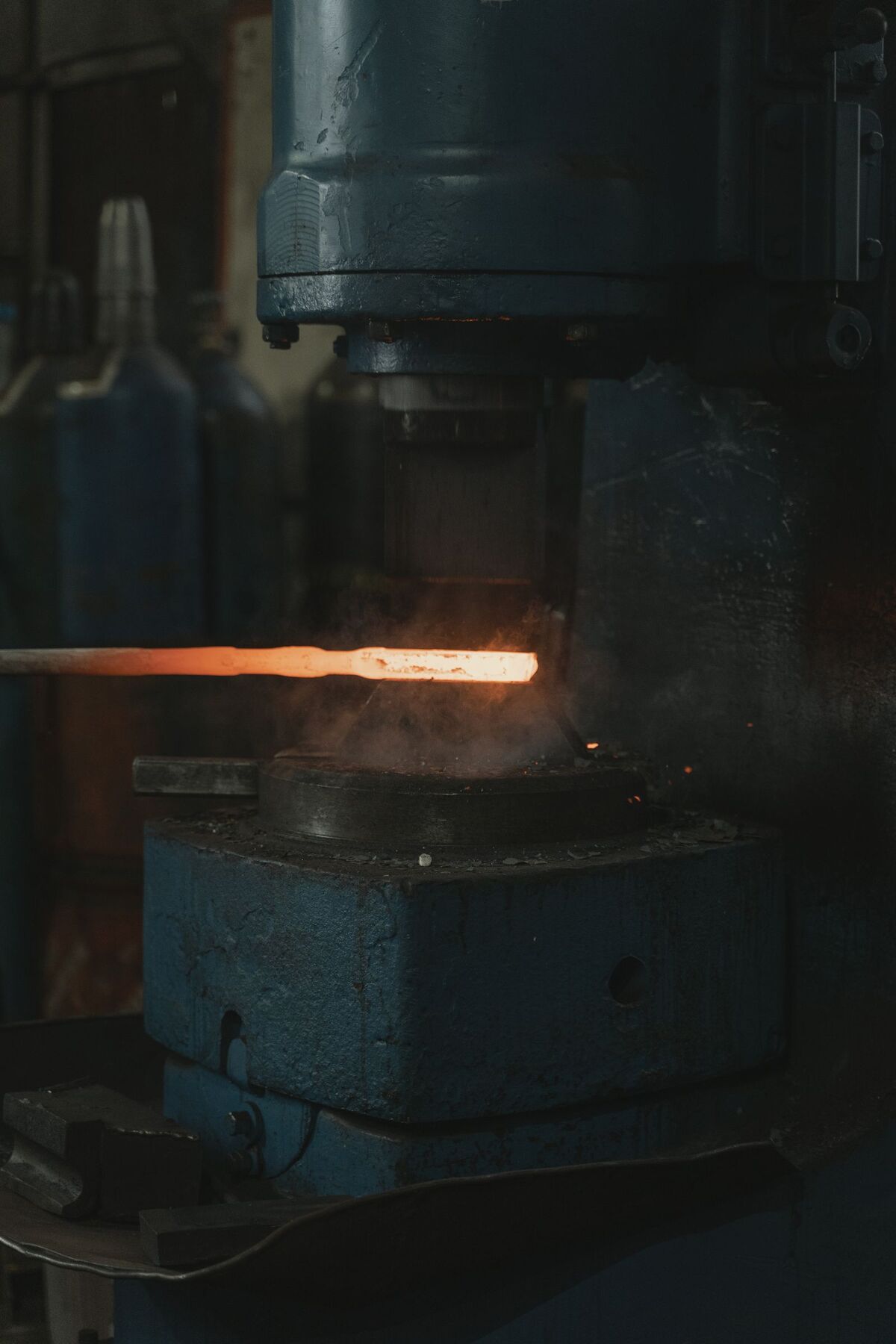
A steel billet, cut to the right weight, is heated to its forging range, around 1,200 °C. It is then struck or pressed between two dies engraved with the shape of the part. The metal fills the cavity; the excess escapes as a thin flash, removed by trimming. The result is a part close to its final dimensions, ready for heat treatment and machining.
Why choose a stamped part?
- Mechanical strength. The grain flow follows the contour of the part instead of being cut by machining: better impact and fatigue resistance.
- Sound material. Hot deformation compacts the metal structure, without the porosity sometimes found in castings.
- Less material and machining. The blank is already close to its final shape: less swarf and fewer machine hours than machining from solid.
- Repeatability. The same die produces identical parts from batch to batch, to tight tolerances.
Our stamping resources in Kénitra
Material is cut on automatic shears, then heated in induction furnaces for fast, even heating. Forming takes place on our maxi presses from 630 to 1,000 tonnes and on a 2,000 kg·m drop hammer. The plant also has mechanical presses from 5 to 400 tonnes. We stamp carbon steels, alloy and low-alloy steels, and stainless steels.
Dies designed and made in-house
Every part has its own dedicated tool. Our engineering office designs the blank and its die in 3D CAD from your drawing; our tool shop makes the dies and refurbishes them over the series. Our engineers and technicians are backed by technical assistance from French, Italian and Swiss forges.
From blank to ready-to-fit part
After stamping, parts are heat treated (quenching and tempering, normalising), then machined on CNC lathes and milling machines where required. Quality control covers both raw material and finished parts, including non-destructive testing. You receive a finished part from a single supplier.
Which industries?
Our stamped parts are used in rail and heavy trucks, hydraulics and industrial valves, energy, public works, mining and quarrying. Customers such as ONCF, OCP and Managem entrust us with their forged parts.